
Track & Trace
Traceability that starts directly in the line.
BBULL Track & Trace systems connect product codes, inspection results and process data into traceable information – for quality assurance, documentation and audit-ready traceability.
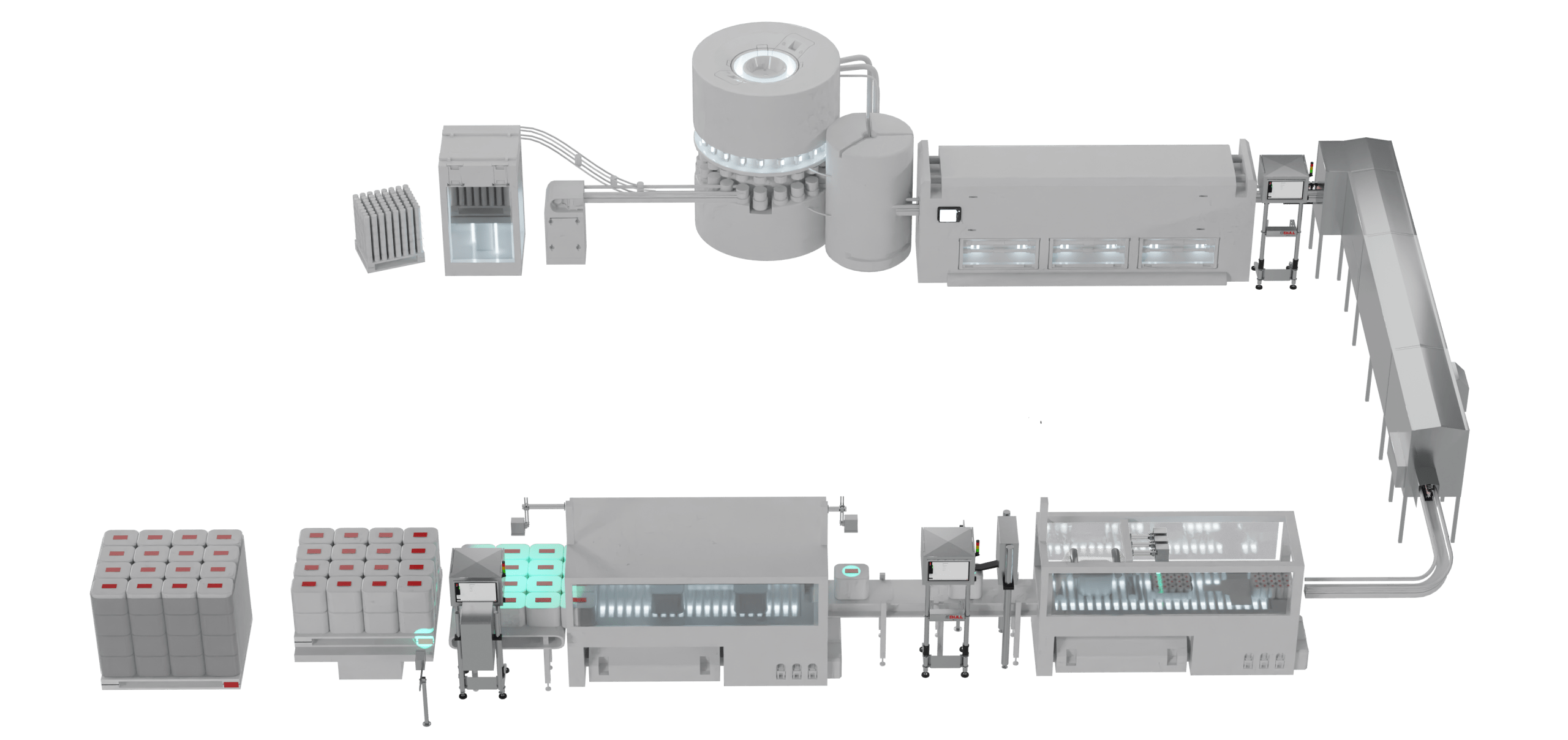
Track & Trace Functions
Ready for standards, line reality and audit requirements.
BBULL Track & Trace solutions are integrated to match the existing line – from code capture to the documented transfer of relevant process data.
Flexible & open
Retrofit-ready and adaptable to existing lines, products and interfaces.
Quick to implement
Structured implementation with clear technical assessment and a realistic project start.
Map standards
Support for relevant code and traceability requirements such as GS1 or Chestny ZNAK.
Code reliability
Verification of readability, product assignment and data linking directly in the process.

Transparency & traceability
Product codes become usable information.
Track & Trace makes product and process information usable: for quality assurance, proof of origin, complaint analysis and secure communication along the value chain.
Quality records
Inspection results, readability and relevant process events can be assigned to the product or batch.
Origin & material flow
Products, packaging levels and batches can be linked in a traceable way.
Complaint analysis
In case of deviations, affected products, time periods and process data can be narrowed down more precisely.
Audit-ready documentation
Relevant data is available in a structured format – for internal quality assurance, records and external requirements.
Inline integration
Traceability is connected with quality assurance.
Relevant information is generated directly in the line: codes are read, inspections are performed, defective products are rejected and events can be documented.
Read codes
Product codes are captured during the production process and linked with relevant data.
Inspect quality
Inspection modules check readability, product features or additional quality criteria directly in the line.
Secure rejection
Defective or not clearly assignable products can be removed from the process in a targeted way.

How it works
How a code becomes a traceable data record.
Track & Trace connects product identification, inspection events and process data. This creates a traceable chain of information from the individual product to higher-level analysis.
Code product
Products, containers or packaging levels receive unique codes as the basis for later assignment and traceability.
Capture code
Cameras or reading systems check whether codes are present, readable and correctly assignable.
Link inspection
Inspection results, line states and rejection decisions can be connected with the product or batch context.
Aggregate data
Relevant events are collected, structured and prepared for analysis, reporting or interfaces.
Connect systems
Data can be transferred via suitable interfaces to ERP, MES, reporting or customer-specific systems.
Use records
Information is available in a traceable way for quality assurance, audits, complaints and internal process analysis.
Clarify project
Do you want to implement traceability in your line?
For an initial assessment, the inspection task, line speed, containers, existing interfaces and desired documentation requirements are particularly relevant.
Helpful for project start
- Product and container type
- Line speed and available space
- Code type, data source and target systems
- Inspection tasks and required records
FAQ
Frequently asked questions about Track & Trace.
Short answers to typical questions about benefits, entry points, integration and economic viability of Track & Trace solutions in filling lines.
Track & Trace makes products, batches and process events traceable. Manufacturers gain transparency, can narrow down sources of error faster and provide relevant records for quality assurance, audits or external requirements.
No. Entry can be modular, for example through line identification, code capture or pallet tracking. A solid basis allows later expansions without making the project unnecessarily large from the start.
Filling lines operate at high speeds, with changing formats, different packaging levels and tight tolerances. A solution therefore has to read reliably, assign data dependably and integrate cleanly into existing line and data systems.
Unreadable or incorrectly assigned codes can lead to rework, blocked goods, incorrect assignments or delays in logistics and quality assurance. Track & Trace reduces this risk through controlled capture and clear data assignment.
BBULL supports you with powerful code and inspection technology, flexible integration options and a clear technical assessment of the line. The goal is a suitable solution without unnecessary complexity or rigid large-scale systems.
The effort depends on the line, inspection task, container, speed, available space and existing interfaces. However, many BBULL solutions are deliberately designed to fit into existing architectures.
That depends on the risk profile, product volumes, previous error costs and the requirements for documentation or traceability. The decisive factor is not only the purchase price, but the value created through fewer errors, better records and more stable processes.